


What SureBet means
SureBet is a method for finding betting opportunities where every possible outcome of an event can be covered with a profit.
The goal is not to predict who will win. The goal is to use different odds from different sportsbooks to generate a profit where the final result matters as little as possible.
A normal bettor thinks:
“Which outcome will happen?”
A SureBet user thinks:
“Can I cover every outcome and still make a profit?”
That is the main idea. With SureBet, one bet will win and the other bet will lose. That is normal. What matters is not the result of one single bet, but the final result of the full operation.
Why SureBets exist
Sportsbooks do not always offer the same odds.
One sportsbook may have a higher price on one outcome, while another sportsbook may have a higher price on the opposite outcome. When the difference between those prices is large enough, it can create a SureBet.
This can happen because sportsbooks use different models, update their odds at different speeds, react differently to betting activity, or have different opinions about the same event. Sometimes a SureBet can also appear because one sportsbook is slow to move its odds or has made a pricing mistake.
In simple terms, SureBet opportunities exist because the betting market is not always perfectly aligned.
NinjaBet helps you find these price differences faster and shows you how to divide your stakes correctly.
The basic idea
A SureBet works by covering every possible result of the same event.
For example, in an NBA game there are two possible outcomes:
- The Lakers win
- The Celtics win
If you place the correct amount on the Lakers with one sportsbook and the correct amount on the Celtics with another sportsbook, one of the two bets must win. The question is whether the winning bet returns enough money to cover the losing bet and still leave a profit. If it does, you have a SureBet.
The simple theory
Every price represents an implied probability.
For American odds, the formula depends on whether the price is negative (a favorite) or positive (an underdog):
- Negative odds: Implied Probability = (-Odds) / ((-Odds) + 100)
- Positive odds: Implied Probability = 100 / (Odds + 100)
For example, an even price of +100 represents an implied probability of 50%:
100 / (100 + 100) = 50%
In a fair two-outcome market, both outcomes could be priced at +100.
That would mean:
50% + 50% = 100%
In reality, sportsbooks always add a margin to their odds. This built-in margin is called the vig, and it means the total implied probability of a normal sportsbook market is usually higher than 100%.
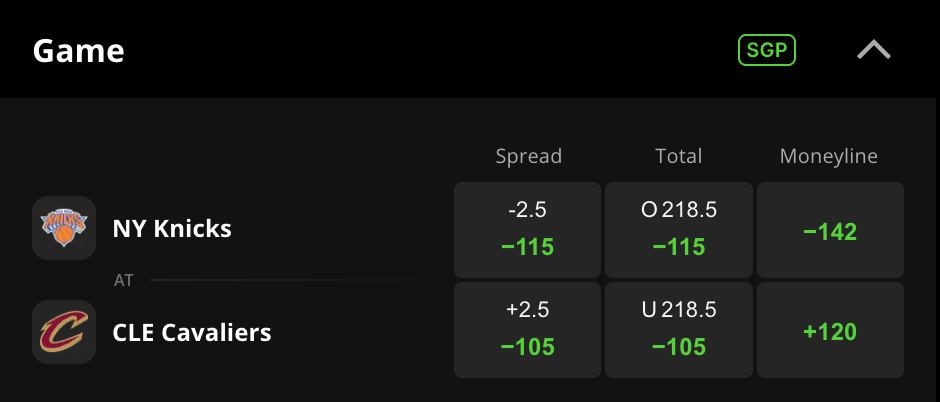
For example, a Moneyline market priced at -143 and +120 carries a sportsbook margin (vig) of about 4.28%. Converting each price to its implied probability (decimal 1.70 and 2.20 as the intermediate step):
[1 / 1.70 + 1 / 2.20] - 1 = 1.0428 - 1 = 0.0428 = 4.28%
A SureBet appears when you take the best odds from different sportsbooks and the total implied probability becomes lower than 100%.
That is the key test. If the total is below 100%, the odds are strong enough to create a profit if the stakes are calculated correctly.
A simple example
Imagine an NBA game between the Golden State Warriors and the Denver Nuggets.
Sportsbook 1 offers:
Warriors to win at +110
Sportsbook 2 offers:
Nuggets to win at +110
Now calculate the implied probabilities. For positive American odds, Implied Probability = 100 / (Odds + 100):
100 / (110 + 100) = 47.62%
For the Warriors, the implied probability is 47.62%.
For the Nuggets, the implied probability is also 47.62%.
Together:
47.62% + 47.62% = 95.24%
Because the total is below 100%, this creates a SureBet opportunity.
You can bet on the Warriors at one sportsbook and the Nuggets at another sportsbook. Since one of the two teams must win, one bet will win and the other will lose. If the stakes are calculated correctly, the final result will be positive in both cases.
Why the stakes are not always equal
In SureBet, you do not place the same amount on every outcome. The stake depends on the odds.
If one outcome has lower odds, it needs a higher stake because it returns less profit per unit staked. If one outcome has higher odds, it needs a lower stake because it returns more profit per unit staked.
The objective is to balance the operation so that each possible outcome gives a similar final result.
This is why the stake calculation is so important. The opportunity comes from the odds, but the profit is created only if the stakes are placed correctly.
The NinjaBet SureBet tool does this calculation for you.
Your job is to check that the event, market, odds, and sportsbooks match what the tool is showing before placing the bets.
Two-outcome and three-outcome SureBets
Some SureBets have two outcomes.
For example, in an NBA moneyline market:
- Team A wins
- Team B wins
This is common in US sports and other markets where there is no draw.
Other SureBets have three outcomes. For example, in a soccer 1X2 market:
- Home team wins
- Draw
- Away team wins
The principle is the same. Every possible outcome must be covered. The only difference is the number of bets required.
A two-outcome SureBet is usually easier to place because there are only two bets. A three-outcome SureBet requires more attention because you need to place three bets correctly before the odds change.
What the profit percentage means
SureBet profit is shown as a percentage.
For example, if a SureBet has a profit of 2%, it means that for every $100 placed across the full operation, the expected profit is around $2, assuming all bets are placed correctly.
This may sound small, but SureBet is not based on one big win. It is based on repeating small controlled opportunities over time.
The profit does not come from predicting the result. It comes from the difference between the odds offered by different sportsbooks.
You are not saying:
“I know who will win.”
You are saying:
“The odds are misaligned enough to create a profitable position.”
That is the difference.
The main practical risk
The biggest practical risk in SureBet is that something changes before the full operation is complete.
For example, you may place the first bet successfully, but before you place the second bet, the odds may move. If the new odds are lower, the SureBet may disappear or become less profitable.
This is why speed and preparation matter.
Before placing a SureBet, you should check the sportsbooks, open the correct markets, confirm the available odds, and be ready to place each bet quickly.
If the odds change before you place all bets, do not force the operation. Recalculate the position or skip the opportunity.
A missed SureBet is better than a badly placed SureBet.
The most important thing to remember
SureBet is not about predicting sports.
It is about finding price differences.
The sportsbooks create the opportunity by offering different odds.
The calculation tells you how much to place on each outcome.
The execution determines whether the opportunity is completed correctly.
If everything is done properly, the final result of the event should matter much less than in a normal bet.
Final summary
SureBet is a strategy based on odds differences between sportsbooks.
When the best available odds across all outcomes create a total implied probability below 100%, a SureBet opportunity exists.
The goal is to cover every outcome with the correct stakes so that the combined result produces a profit.
One bet wins and the other loses. That is normal. What matters is not the result of one single bet. What matters is the result of the complete operation.
What SureBet means
SureBet is a method for finding betting opportunities where every possible outcome of an event can be covered with a profit.
The goal is not to predict who will win. The goal is to use different odds from different sportsbooks to generate a profit where the final result matters as little as possible.
A normal bettor thinks:
“Which outcome will happen?”
A SureBet user thinks:
“Can I cover every outcome and still make a profit?”
That is the main idea. With SureBet, one bet will win and the other bet will lose. That is normal. What matters is not the result of one single bet, but the final result of the full operation.
Why SureBets exist
Sportsbooks do not always offer the same odds.
One sportsbook may have a higher price on one outcome, while another sportsbook may have a higher price on the opposite outcome. When the difference between those prices is large enough, it can create a SureBet.
This can happen because sportsbooks use different models, update their odds at different speeds, react differently to betting activity, or have different opinions about the same event. Sometimes a SureBet can also appear because one sportsbook is slow to move its odds or has made a pricing mistake.
In simple terms, SureBet opportunities exist because the betting market is not always perfectly aligned.
NinjaBet helps you find these price differences faster and shows you how to divide your stakes correctly.
The basic idea
A SureBet works by covering every possible result of the same event.
For example, in an NBA game there are two possible outcomes:
- The Lakers win
- The Celtics win
If you place the correct amount on the Lakers with one sportsbook and the correct amount on the Celtics with another sportsbook, one of the two bets must win. The question is whether the winning bet returns enough money to cover the losing bet and still leave a profit. If it does, you have a SureBet.
The simple theory
Every price represents an implied probability.
For American odds, the formula depends on whether the price is negative (a favorite) or positive (an underdog):
- Negative odds: Implied Probability = (-Odds) / ((-Odds) + 100)
- Positive odds: Implied Probability = 100 / (Odds + 100)
For example, an even price of +100 represents an implied probability of 50%:
100 / (100 + 100) = 50%
In a fair two-outcome market, both outcomes could be priced at +100.
That would mean:
50% + 50% = 100%
In reality, sportsbooks always add a margin to their odds. This built-in margin is called the vig, and it means the total implied probability of a normal sportsbook market is usually higher than 100%.
For example, a Moneyline market priced at -143 and +120 carries a sportsbook margin (vig) of about 4.28%. Converting each price to its implied probability (decimal 1.70 and 2.20 as the intermediate step):
[1 / 1.70 + 1 / 2.20] - 1 = 1.0428 - 1 = 0.0428 = 4.28%
A SureBet appears when you take the best odds from different sportsbooks and the total implied probability becomes lower than 100%.
That is the key test. If the total is below 100%, the odds are strong enough to create a profit if the stakes are calculated correctly.
A simple example
Imagine an NBA game between the Golden State Warriors and the Denver Nuggets.
Sportsbook 1 offers:
Warriors to win at +110
Sportsbook 2 offers:
Nuggets to win at +110
Now calculate the implied probabilities. For positive American odds, Implied Probability = 100 / (Odds + 100):
100 / (110 + 100) = 47.62%
For the Warriors, the implied probability is 47.62%.
For the Nuggets, the implied probability is also 47.62%.
Together:
47.62% + 47.62% = 95.24%
Because the total is below 100%, this creates a SureBet opportunity.
You can bet on the Warriors at one sportsbook and the Nuggets at another sportsbook. Since one of the two teams must win, one bet will win and the other will lose. If the stakes are calculated correctly, the final result will be positive in both cases.
Why the stakes are not always equal
In SureBet, you do not place the same amount on every outcome. The stake depends on the odds.
If one outcome has lower odds, it needs a higher stake because it returns less profit per unit staked. If one outcome has higher odds, it needs a lower stake because it returns more profit per unit staked.
The objective is to balance the operation so that each possible outcome gives a similar final result.
This is why the stake calculation is so important. The opportunity comes from the odds, but the profit is created only if the stakes are placed correctly.
The NinjaBet SureBet tool does this calculation for you.
Your job is to check that the event, market, odds, and sportsbooks match what the tool is showing before placing the bets.
Two-outcome and three-outcome SureBets
Some SureBets have two outcomes.
For example, in an NBA moneyline market:
- Team A wins
- Team B wins
This is common in US sports and other markets where there is no draw.
Other SureBets have three outcomes. For example, in a soccer 1X2 market:
- Home team wins
- Draw
- Away team wins
The principle is the same. Every possible outcome must be covered. The only difference is the number of bets required.
A two-outcome SureBet is usually easier to place because there are only two bets. A three-outcome SureBet requires more attention because you need to place three bets correctly before the odds change.
What the profit percentage means
SureBet profit is shown as a percentage.
For example, if a SureBet has a profit of 2%, it means that for every $100 placed across the full operation, the expected profit is around $2, assuming all bets are placed correctly.
This may sound small, but SureBet is not based on one big win. It is based on repeating small controlled opportunities over time.
The profit does not come from predicting the result. It comes from the difference between the odds offered by different sportsbooks.
You are not saying:
“I know who will win.”
You are saying:
“The odds are misaligned enough to create a profitable position.”
That is the difference.
The main practical risk
The biggest practical risk in SureBet is that something changes before the full operation is complete.
For example, you may place the first bet successfully, but before you place the second bet, the odds may move. If the new odds are lower, the SureBet may disappear or become less profitable.
This is why speed and preparation matter.
Before placing a SureBet, you should check the sportsbooks, open the correct markets, confirm the available odds, and be ready to place each bet quickly.
If the odds change before you place all bets, do not force the operation. Recalculate the position or skip the opportunity.
A missed SureBet is better than a badly placed SureBet.
The most important thing to remember
SureBet is not about predicting sports.
It is about finding price differences.
The sportsbooks create the opportunity by offering different odds.
The calculation tells you how much to place on each outcome.
The execution determines whether the opportunity is completed correctly.
If everything is done properly, the final result of the event should matter much less than in a normal bet.
Final summary
SureBet is a strategy based on odds differences between sportsbooks.
When the best available odds across all outcomes create a total implied probability below 100%, a SureBet opportunity exists.
The goal is to cover every outcome with the correct stakes so that the combined result produces a profit.
One bet wins and the other loses. That is normal. What matters is not the result of one single bet. What matters is the result of the complete operation.
Check out the discussion in the forum
Replies are posted on NinjaClub, our community forum — join the conversation there.
Reply on the forum